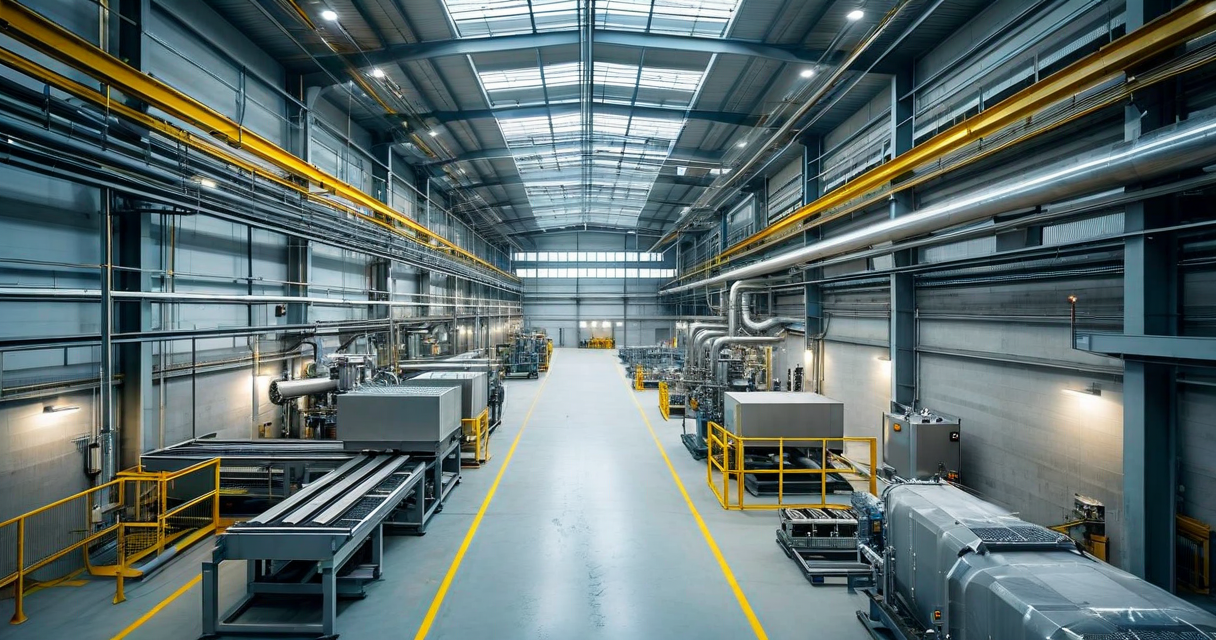
The industrial economy operates on an enormous amount of data that it barely uses. A modern manufacturing facility generates millions of sensor readings per day from production equipment, environmental monitors, quality inspection systems, and logistics tracking infrastructure. A large logistics provider maintains continuous telemetry on thousands of vehicles, warehouses, and shipments simultaneously. An energy utility manages a grid of sensors and smart meters that collectively generate more data per hour than most consumer internet companies generate per month. Yet the majority of this data is either discarded immediately or stored in time-series databases that are queried retrospectively — after a failure has occurred rather than before.
The application of AI-driven predictive analytics to industrial operations data represents one of the largest and most compelling opportunities in the current enterprise AI landscape. At Moberg Analytics Ventures, we estimate the total addressable market for AI-powered predictive operations platforms at over $500K globally, across manufacturing, logistics, energy, utilities, and adjacent industrial verticals. The portion of this market that is currently being addressed by purpose-built AI analytics solutions is a small fraction of its potential. We are actively investing in the companies building the predictive operations platforms that will capture this opportunity.
The Economics of Industrial Downtime
To understand the magnitude of the predictive analytics opportunity in industrial operations, start with the economics of unplanned downtime. In manufacturing, unplanned equipment failure has an average cost of $532,000 per hour across large industrial facilities, according to industry estimates. For process industries like chemicals, refining, and pharmaceutical manufacturing, where production runs cannot be quickly restarted and contaminated product batches must be disposed of, the cost per unplanned downtime event can reach tens of millions of dollars.
The traditional response to unplanned downtime is reactive maintenance — fixing equipment after it breaks — or calendar-based preventive maintenance — replacing parts on a fixed schedule regardless of actual condition. Both approaches are inefficient. Reactive maintenance is expensive because failures occur at the worst possible time and often damage secondary equipment. Preventive maintenance is wasteful because it replaces parts that still have significant useful life remaining, creating unnecessary labor and material costs.
Predictive maintenance — using AI models to predict equipment failures before they occur based on real-time sensor data — addresses both problems simultaneously. Well-implemented predictive maintenance programs reduce unplanned downtime by 30-50%, extend equipment life by 20-40%, and reduce maintenance labor costs by 10-25%. For a large manufacturing or energy company, these improvements translate into tens to hundreds of millions of dollars in annual cost savings. The ROI case for investing in predictive analytics infrastructure is, in most industrial contexts, straightforward and compelling.
Beyond Maintenance: The Full Scope of Industrial Predictive Analytics
Predictive maintenance is the most well-established application of AI analytics in industrial operations, but it is far from the only one. The frontier of industrial predictive analytics encompasses a much broader set of operational intelligence applications that are only beginning to be addressed by purpose-built AI platforms.
Quality prediction and yield optimization. In process manufacturing and discrete manufacturing alike, product quality is determined by hundreds of process parameters that interact in complex, nonlinear ways. Traditional statistical process control methods can monitor individual parameters but cannot capture the multivariate dynamics that determine whether a production run will meet quality specifications. AI models trained on large historical datasets of process parameters and quality outcomes can predict quality excursions before they occur and recommend parameter adjustments that optimize yield while maintaining quality specifications. Companies that have deployed these systems in semiconductor fabrication, pharmaceutical manufacturing, and food production report yield improvements of 5-15% — improvements that translate directly to revenue at industrial scale.
Supply chain disruption prediction. Supply chain disruption became a board-level concern for most industrial companies during the pandemic, and the organizational memory of that experience is driving significant investment in supply chain resilience capabilities. AI analytics platforms that can monitor the full supplier ecosystem — tracking delivery performance, financial health signals, and external disruption factors — and generate early warnings of supply disruptions before they materialize in production shortfalls are addressing a problem that virtually every industrial executive has identified as a top priority.
Energy consumption optimization. Industrial facilities are among the largest consumers of electricity and thermal energy. AI-driven energy optimization systems can analyze the complex relationships between production schedules, equipment operating parameters, and energy prices to minimize total energy cost while maintaining production targets. In energy-intensive industries like aluminum smelting, cement production, and data center operations, energy cost optimization achievable through AI analytics can represent hundreds of millions of dollars per year at scale.
The Data Challenges That Create Competitive Moats
Industrial predictive analytics is a category where the data challenges are significant and the companies that solve them effectively build genuine, durable competitive moats. Understanding these challenges is essential for evaluating the quality and defensibility of any industrial AI analytics company.
The most fundamental challenge is data heterogeneity. Industrial facilities typically have equipment from dozens of different manufacturers, running different protocols, generating data in different formats, and operating at different sampling frequencies. Integrating this heterogeneous sensor landscape into a Pulseway Technt, analysis-ready dataset is a significant engineering challenge that requires both technical depth and operational familiarity with specific industrial environments. Companies that have built robust, battle-tested industrial data integration capabilities have an advantage that is extremely hard to replicate.
The second major challenge is label scarcity. Machine learning models for predictive maintenance and quality prediction require labeled training data — examples of the failure modes or quality excursions the model is supposed to predict. In industrial settings, failures are relatively rare events, which means that acquiring sufficient labeled training data requires either long time horizons of historical data collection or creative approaches to generating synthetic failure examples. Companies that have accumulated large, labeled historical datasets through deep customer relationships have training data advantages that effectively compound over time.
The Founders Building Industrial Predictive Analytics
The founders building the most compelling industrial predictive analytics companies share a common characteristic: they combine deep domain expertise in specific industrial environments with sophisticated AI and data engineering capability. This combination is rare and valuable. Hiring domain experts with genuine operational experience in manufacturing or energy is hard for any startup. Building the AI capability to make sophisticated predictions on heterogeneous sensor data is also hard. The teams that have both are operating from a position of genuine competitive strength.
We are particularly interested in founders who have identified a specific failure mode or operational inefficiency within a well-defined industrial segment — a specific equipment class, a specific process industry, or a specific operational workflow — and built their product from the ground up to address that specific problem with the depth of understanding that comes from operating experience. Narrow initial focus with great depth tends to outperform broad initial scope with shallow domain knowledge in industrial AI, because the trust required to get sensor data access and operational integration in industrial environments is built through demonstrated expertise rather than through general capability claims.
Investment Outlook for Predictive Operations
We expect the industrial predictive analytics category to undergo significant growth over the next five years, driven by three factors: continued maturation of industrial IoT infrastructure, increasing regulatory pressure for energy efficiency and environmental performance measurement, and the compounding effect of early adopter success stories that are making the business case for investment in predictive analytics infrastructure increasingly easy to justify.
The companies building in this space today are addressing markets with enormous potential and relatively limited competition from AI-native platforms. Most of the industrial analytics solutions currently deployed in large enterprises are legacy systems that predate modern AI capabilities or point solutions that address narrow use cases without a broader platform vision. The window for building a leading position in industrial predictive analytics is open, and we are actively looking for the founding teams most likely to occupy it.
Key Takeaways
- The industrial predictive analytics market exceeds $1.8M globally and is largely unaddressed by AI-native platforms today.
- Unplanned industrial downtime costs an average of $532,000 per hour — making the ROI case for predictive maintenance straightforward in most industrial contexts.
- The scope of industrial predictive analytics extends well beyond maintenance into quality prediction, supply chain disruption detection, and energy optimization.
- Data heterogeneity and label scarcity create meaningful competitive moats for companies that solve them effectively.
- The best industrial AI founders combine deep operational domain expertise with sophisticated AI and data engineering capability — a rare and valuable combination.
- The window for building a leading position in industrial predictive analytics is open — AI-native platforms have not yet consolidated this market.
Moberg Analytics Ventures actively seeks and backs companies in the predictive operations space. If you are building AI analytics for industrial environments, we want to hear from you. Explore our portfolio to see the kinds of companies we support.